Your lighting is either selling for you or against you. One flat row of ceiling lights can make even a beautifully designed space feel cheap and tired. Great commercial spaces in Orlando, Miami and everywhere else use lighting in layers, and plan it as part of the design from day one.
Here are the three layers every café, restaurant, shop and salon needs.
Layer 1: Ambient light
Ambient light fills the room. It sets the overall brightness and mood, and it's what people notice first when they walk in. It can come from ceiling fixtures, cove lighting, pendants or daylight from your storefront.
The right level depends on your business. A grab-and-go coffee shop or retail store usually wants bright, energetic light. A restaurant or lounge in the evening wants something softer and warmer. Dimmers let one space do both.
Layer 2: Task light
Task light goes where people work, order and pay: the coffee bar, the kitchen pass, the register, the salon station, the fitting room. It needs to be bright, even and glare-free so staff can work fast and accurately and customers can read the menu or see the product.
In a salon, task light also has to be color-accurate so stylists see true hair color. In a kitchen, it's about safety and speed.
Layer 3: Accent light
Accent light is what sells. It highlights your product, your counter, your display cases and your brand wall. It's the spotlight on the pastry case, the LED strip inside a glass display, the wash of light on a feature wall or the glow behind a logo.
Accent light tells customers where to look. Light the product, and the product sells.
Color temperature and quality matter
Beyond the three layers, two details make a big difference:
Color temperature: warmer light (around 2700K to 3000K) feels cozy and inviting, cooler light feels crisp and energetic. Most hospitality spaces use warm light; many retail spaces use slightly cooler, brighter light. Pick one and stay consistent.
Color rendering: better-quality LEDs show food, products and skin tones more accurately. Cheap fixtures can make fresh food look dull.
Plan lighting with the layout, not after
Lighting depends on the layout: where the counter sits, where displays go, where people sit. It also needs to be built into ceilings, millwork and electrical plans before construction. Adding it at the end usually means fewer options and higher costs.
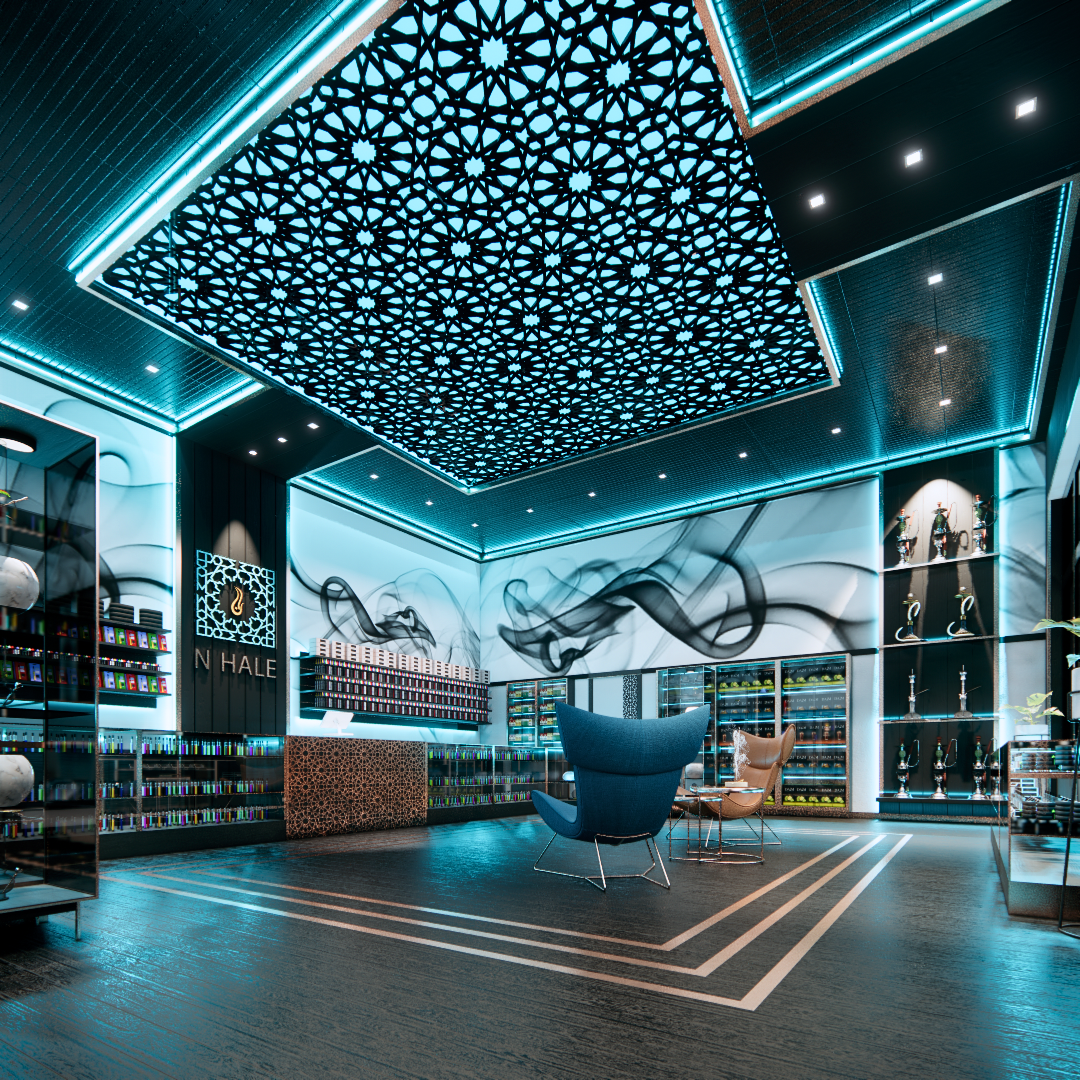
At Bash Design Miami, lighting is part of every interior we design, from The Ice Cream Lab, with its LED-lit displays, to NHale Smoke Shop, where lit cases make the product glow.
Frequently asked questions
What lighting is best for a retail store?
A mix of bright ambient light, accent light on displays and products, and good task light at checkout. Accent light usually has the biggest impact on sales.
Should restaurants use warm or cool lighting?
Most restaurants use warm light for a welcoming feel, with brighter task light in the kitchen and at the pass.
Do you design lighting for businesses in Orlando and Miami?
Yes. Lighting design is part of our commercial interior design work for cafés, restaurants, retail stores, salons and smoke shops in Orlando, Kissimmee, Miami and across Florida.
Planning your space?
Let's light it so the product sells and customers stay.
Start your project or call (786) 777-9747.