Biophilic Design: Bringing Nature Into High-End Interiors
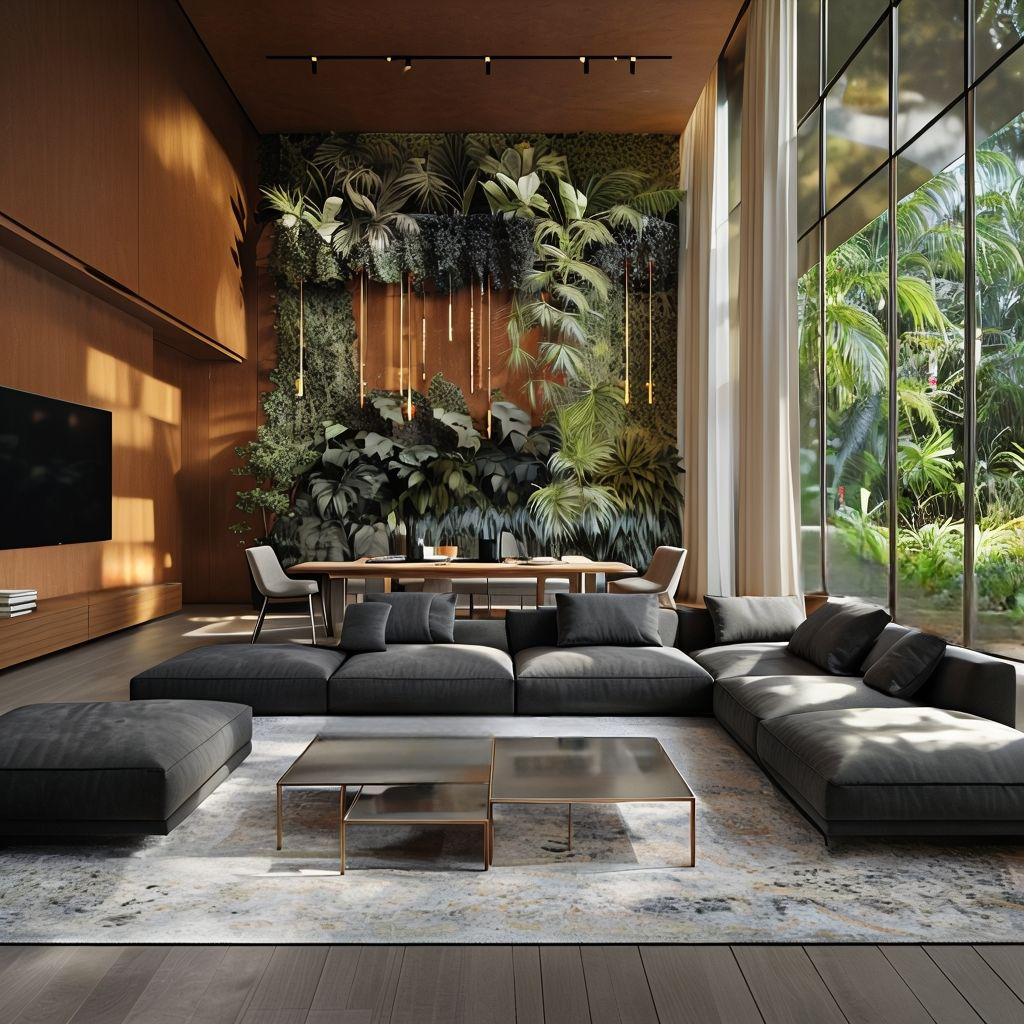
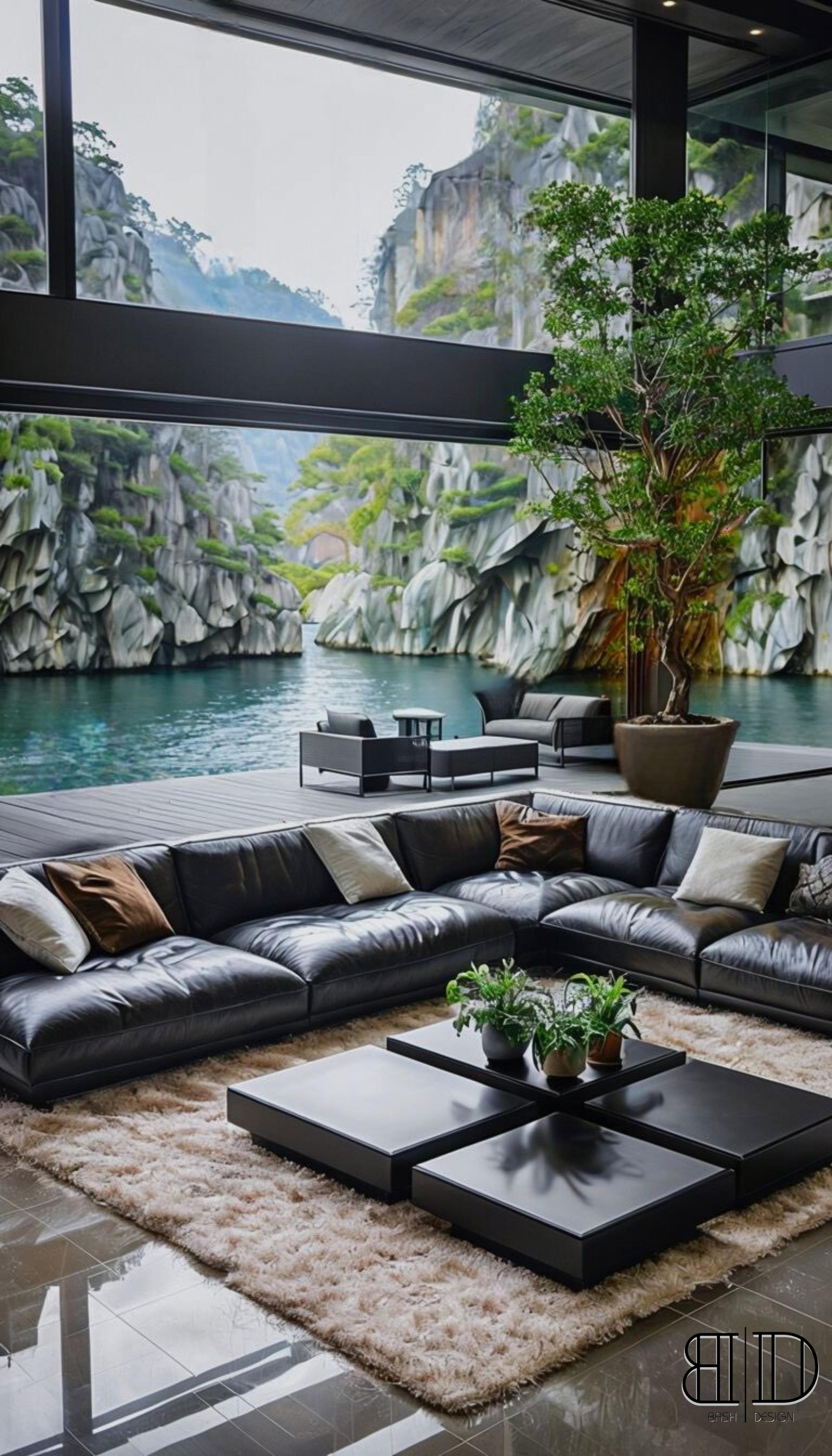
Luxury biophilic living room with natural materials and indoor tree
In luxury interior design, one theme continues to rise above trends: the desire for a deeper connection to nature. Biophilic design—an approach that integrates natural elements, materials, and patterns into the built environment—has become a defining feature in high-end residential spaces. It’s no longer just about adding plants; it’s about creating environments that support wellness, enhance emotional balance, and elevate everyday living through nature-inspired design.
At Bash Design Miami, we embrace biophilic design not as a trend but as a philosophy. Our approach blends organic elements with refined materials, premium craftsmanship, and seamless spatial flow to craft interiors that feel restorative and luxurious.
What Is Biophilic Design?
Biophilic design is built on the idea that humans thrive when connected to the natural world. This connection can be made visually, physically, or sensorially. In high-end interiors, the goal is to incorporate nature in ways that feel intentional, curated, and integrated—not decorative.
Core Principles Include:
• Visual connection to nature
• Natural light optimization
• Organic materials & textures
• Nature-inspired colors
• Outdoor/indoor integration
• Natural shapes, curves, and patterns
• Clean air flow and improved ventilation
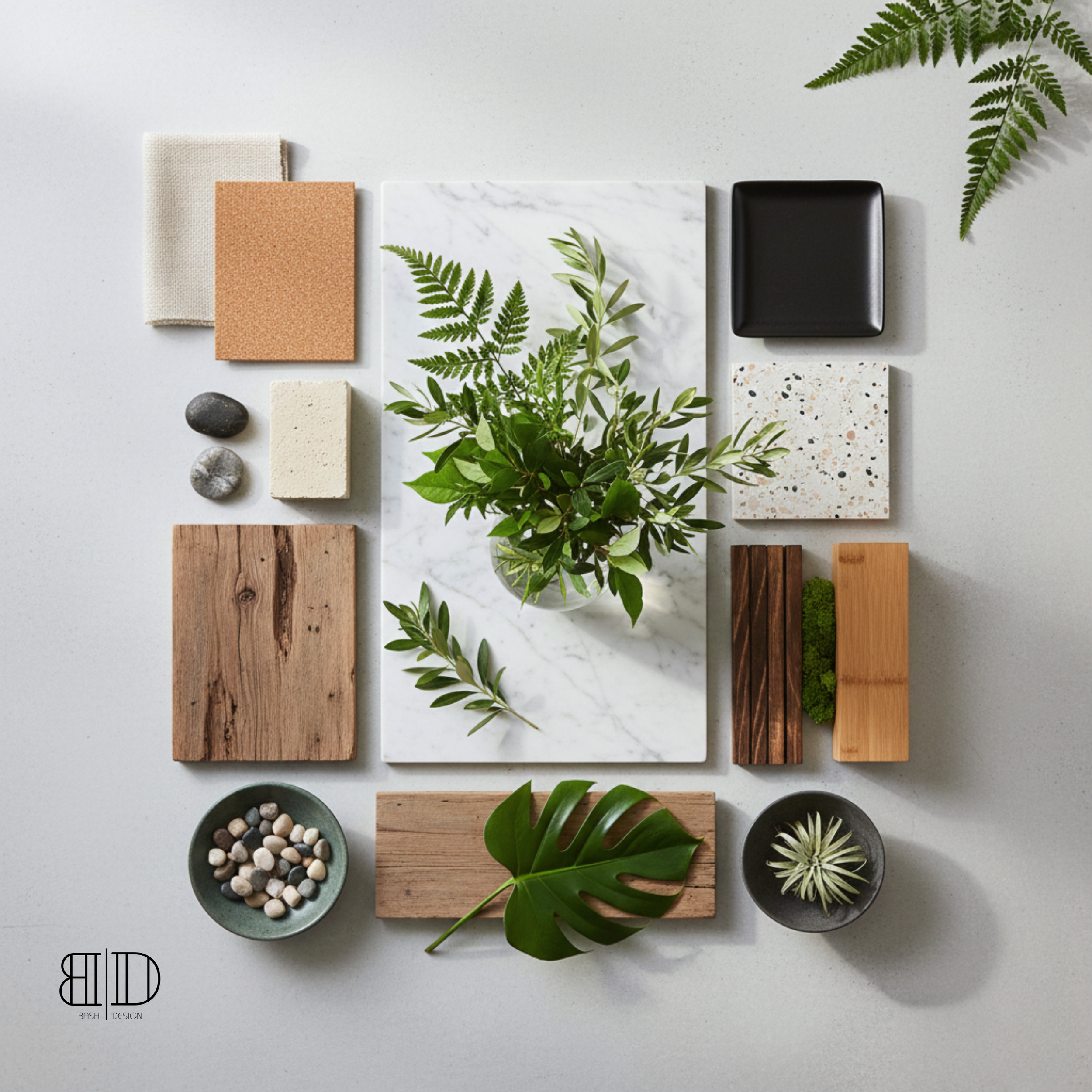
“Biophilic design mood board featuring natural materials and textures”
Why Biophilic Design Matters for Luxury Homes
High-end clients no longer want interiors that simply “look beautiful.” They want homes that improve their lifestyle—spaces that support wellness, minimize stress, and feel like a personal retreat.
Biophilic design offers:
• Enhanced mood and well-being
• Better indoor air quality
• Improved sleep and relaxation
• A calming, spa-like atmosphere
• A timeless aesthetic grounded in nature
• Uniqueness—since natural materials have inherent variations
• Higher perceived property value
Luxury today is defined by quality, wellness, and individuality—biophilic design delivers all three.
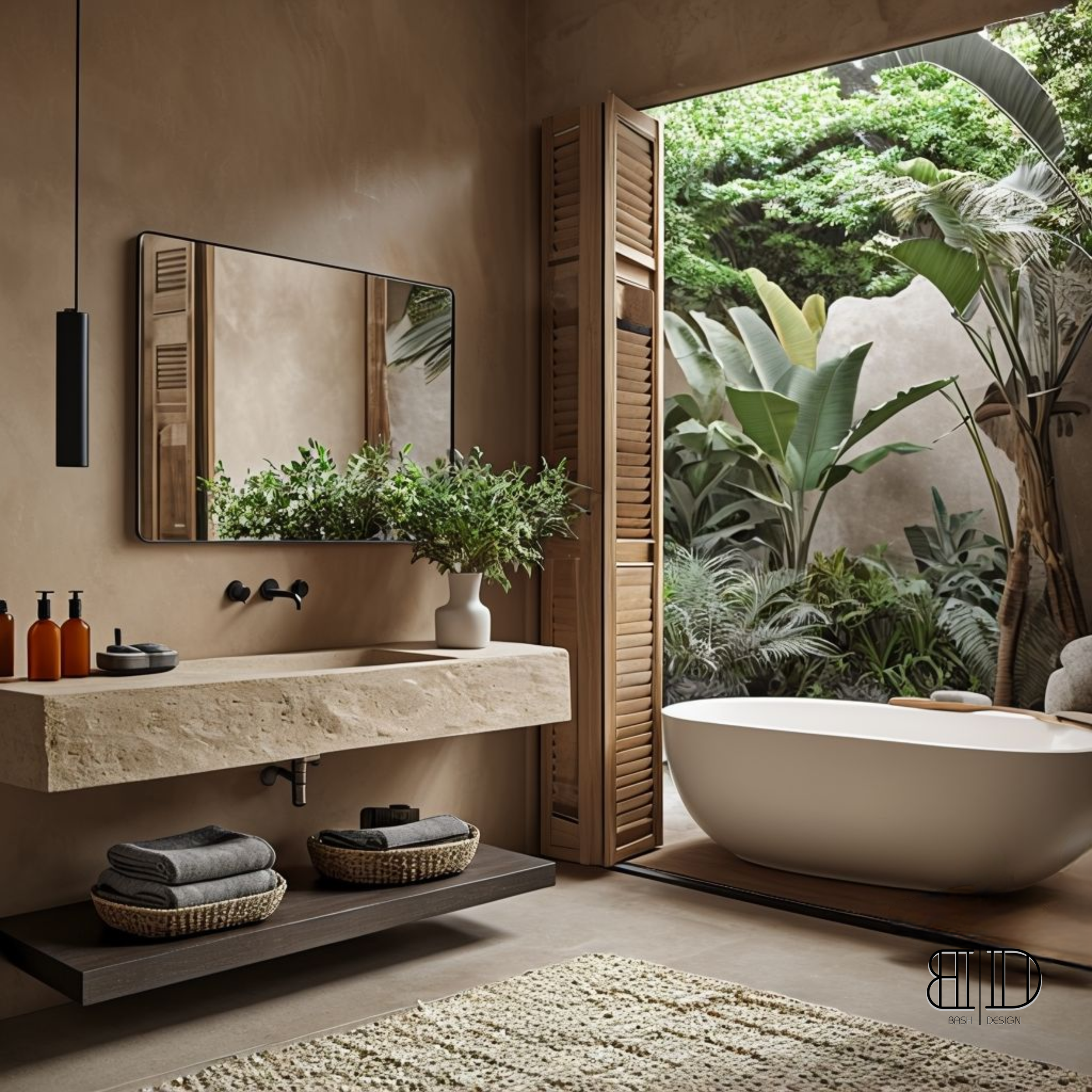
Spa-inspired luxury bathroom using biophilic design elements”
Key Elements of Biophilic Luxury Interiors
1. Natural Materials
In high-end spaces, natural materials elevate the environment instantly.
• Marble, travertine, onyx
• Natural woods (walnut, oak, teak)
• Linen, wool, boucle, jute
• Stoneware, handmade ceramics
• Leather, rattan, cane
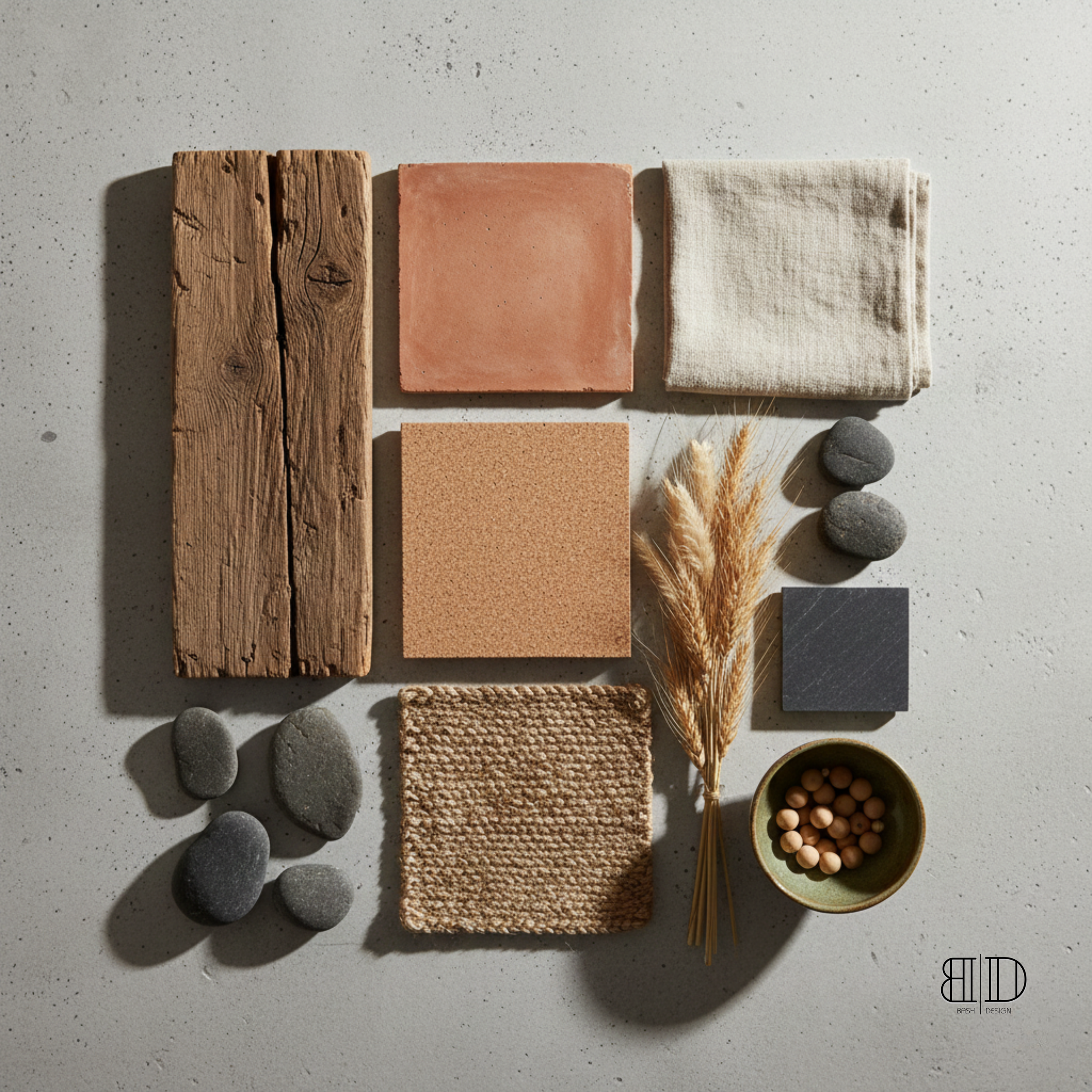
natural materials
Design Tip
We often use D5 Render and SketchUp to visualize material palettes for clients, ensuring they see the tone, texture, and depth before installation.
2. Organic Shapes & Soft Curves
Nature avoids sharp lines, so curves bring softness into a room.
Examples include:
• Arched openings
• Rounded sofas
• Sculptural lighting in wave forms
• Waterfall-edge islands
• Natural free-form tables
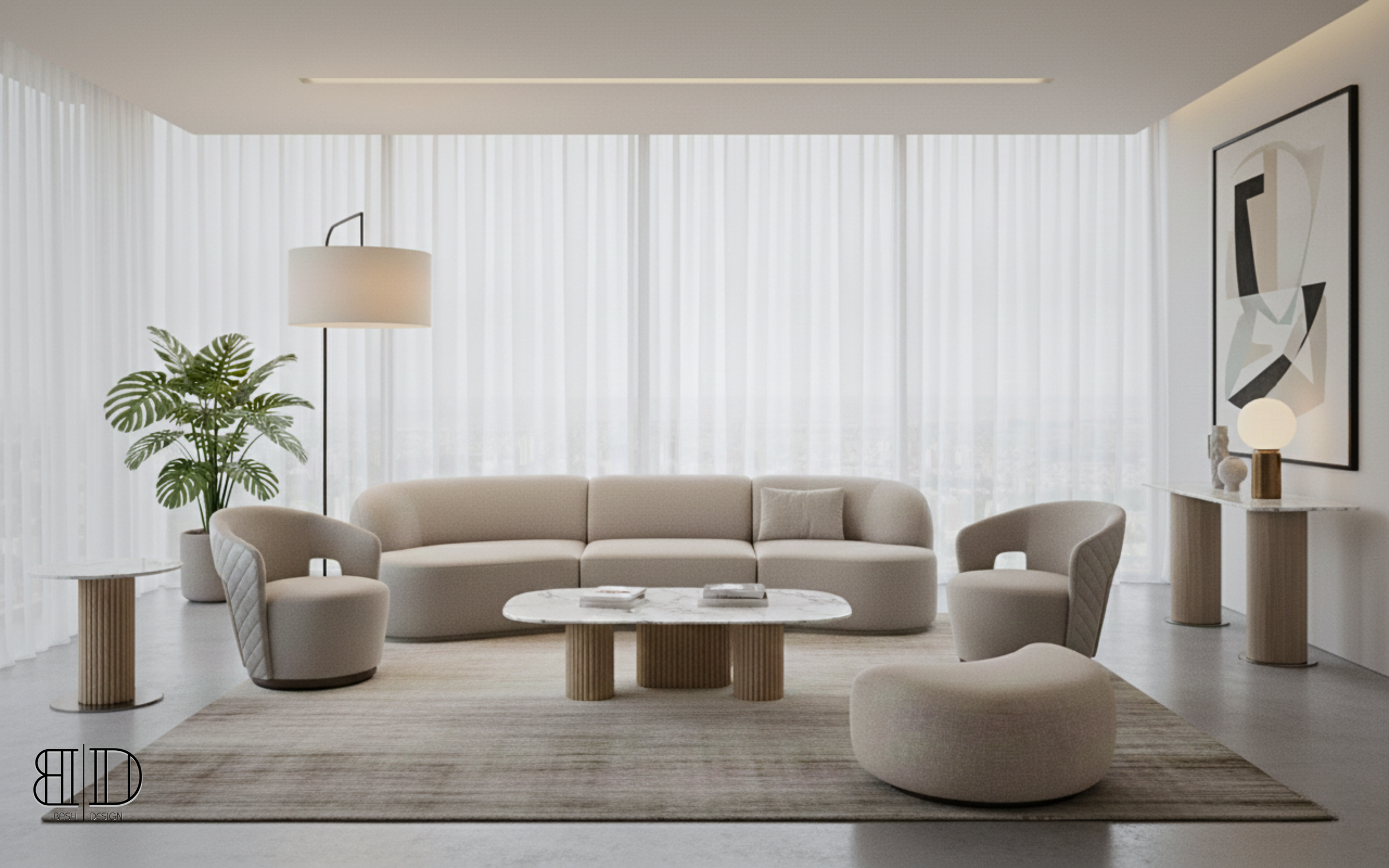
Curved organic sofa in a luxury living room
Curves create flow, warmth, and a sensory comfort that aligns perfectly with luxury design.
3. Greenery & Indoor Landscaping
Plants are essential but must be styled with sophistication. In upscale interiors, this goes beyond potted plants.
High-end options:
• Indoor olive trees
• Bonsai or sculptural trees
• Moss walls
• Vertical gardens
• Decorative terrariums
• Planters built into millwork or shelving
We showcase plant placement within 3D models to balance scale, texture, and volume.
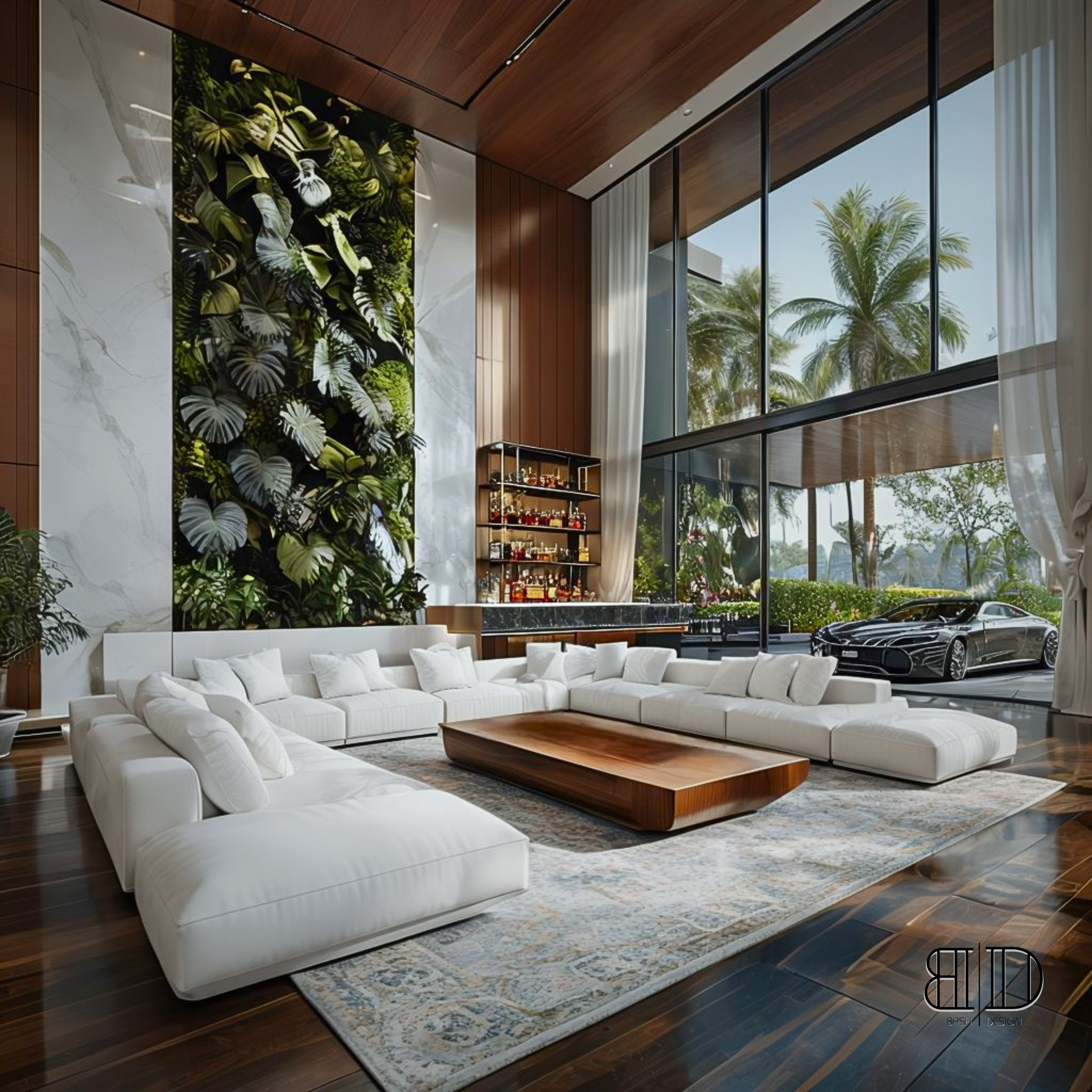
Indoor tree or vertical garden
4. Maximizing Natural Light
Light is the foundation of biophilic design.
Integrations include:
• Floor-to-ceiling windows
• Sheer drapery to soften daylight
• Skylights
• Light wells
• Reflective materials to enhance brightness
Natural light makes every material—stone, wood, metal—look richer and more dimensional.
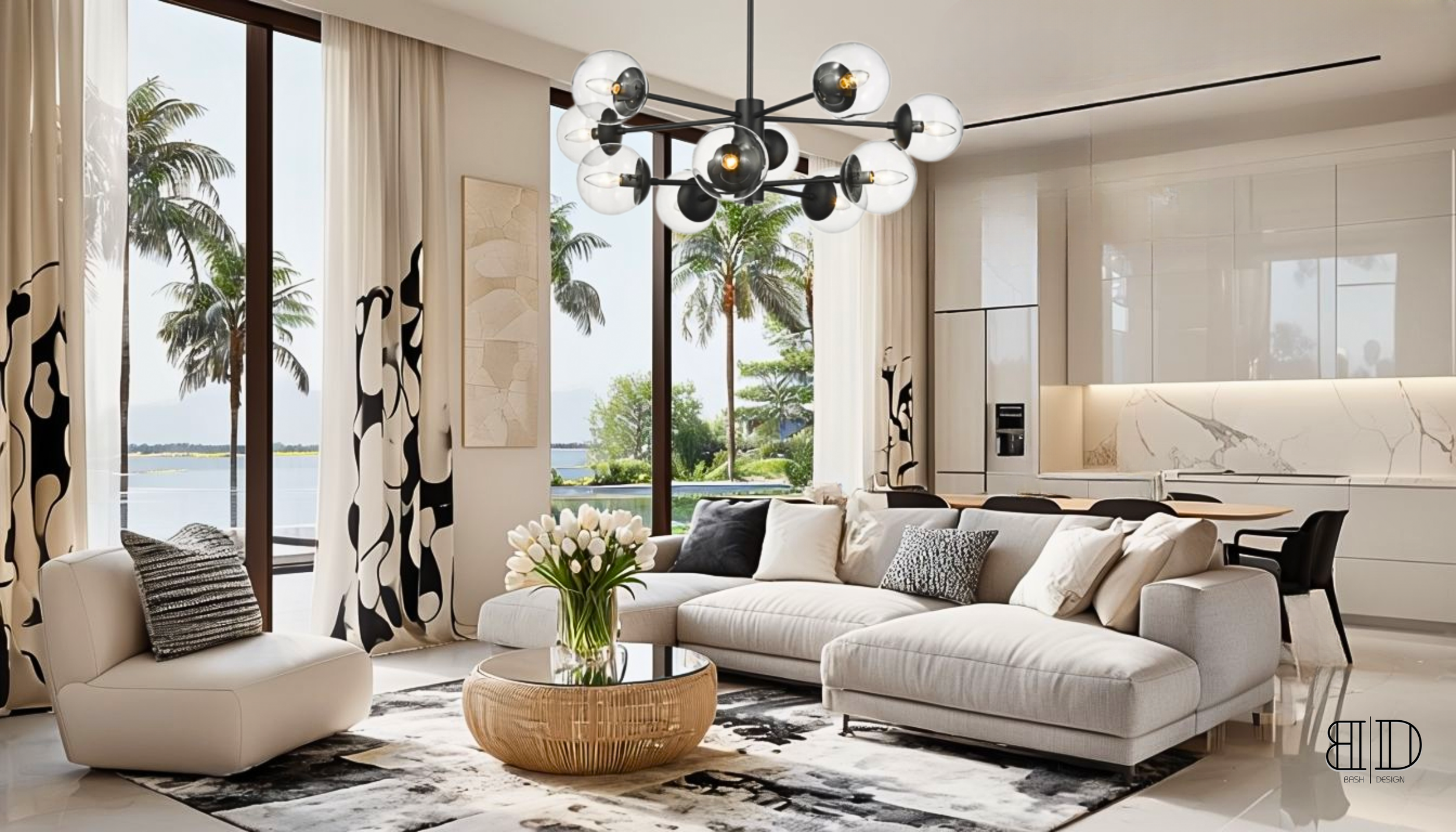
Sunlight-filled living area
5. Water & Sensory Elements
Water is one of the most powerful calming forces.
Luxury-friendly examples:
• Indoor fountains
• Wall-mounted water features
• Outdoor water installations visible from inside
• Rainfall showers
• Textured materials that mimic water patterns
In renderings, reflective materials and soft lighting help clients visualize the sensory effect.
Water feature in a modern interior
6. Nature-Inspired Color Palettes
For 2025, luxury palettes rooted in nature dominate:
• Warm olive + sand
• Terracotta + cream
• Clay + charcoal
• Deep forest green
• Warm browns and tobacco tones
• Stone greys with mineral accents
These palettes feel grounded, elegant, and timeless.
Integrating Biophilic Design Into Your Home
Biophilic design doesn’t require a full renovation—you can introduce it in layers.
Simple upgrades:
• Larger plants or strategic indoor trees
• Natural fiber rugs
• Earthy-toned walls
• Organic accent furniture
• Handmade ceramics
• Reclaimed wood pieces
• Stone accessories
Full design transformations:
• Reworking layout to increase light flow
• Replacing flooring with natural wood or stone
• Adding arches or curved millwork
• Indoor gardens or water installations
• Custom natural-material furniture
At Bash Design Miami, we model these transformations digitally so clients can see the mood shift before any physical work begins.
Conclusion
Biophilic interior design is more than a style; it’s a lifestyle. When executed with intention and luxury craftsmanship, it transforms the home into a sanctuary that supports well-being, relaxation, and beautiful living. Whether you want to integrate natural materials, increase sunlight, or redesign an entire space, biophilic design brings lasting impact and timeless elegance.